
DISTINCT vs DISTINCTIVE: simple spelling tips to remember the difference
The words DISTINCT and DISTINCTIVE are often confused because they’re so similar – but their meanings are different. Read on to learn the difference between these similar words.
Here are my simple tips to remember the difference between DISTINCT and DISTINCTIVE.
When to use DISTINCT
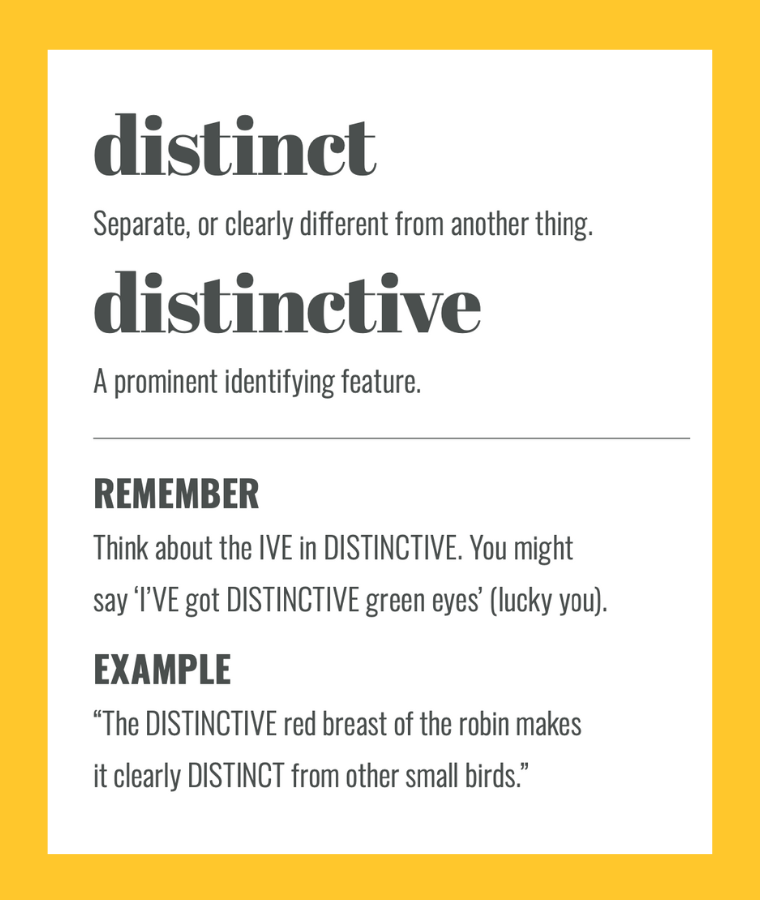
DISTINCT is an adjective meaning separate, or clearly different from another thing.
You can use DISTINCT in a sentence like this:
“There’s a DISTINCT difference between apples and oranges.”
OR
“The awards cover many DISTINCT categories of filmmaking.”
When to use DISTINCTIVE
DISTINCTIVE is an adjective referring to a prominent identifying feature.
You can use DISTINCTIVE in a sentence like this:
“I’d recognise her DISTINCTIVE accent anywhere.”
OR
“Monet’s paintings have a DISTINCTIVE style.”
This sentence shows the difference between DISTINCT and DISTINCTIVE in use:
“The DISTINCTIVE red breast of the robin makes it clearly DISTINCT from other small birds.”
Pro tip
To remember the difference, think about the IVE in DISTINCTIVE. You might say ‘I’VE got DISTINCTIVE green eyes’ (lucky you).
I hope these tips help you remember the difference between DISTINCT and DISTINCTIVE in future!
Get more tips in The Little Book of Confusables
Fun, memorable spelling tips for 600 confusing words, packed into 300+ gorgeous pages: just £11.95.
You’ll wonder how you managed without it!
GOLD award winner: 2023 eLit book awards/Distinguished Favorite: 2023 NYC Big Book Awards.

No more confusing words!
Master 600 confusing words with The Little Book of Confusables: 300 gorgeous pages packed with memorable, fun spelling tips – from ACCEPT + EXCEPT to YOUNG + YOUTHFUL.