My four-times award-winning books take the mystery out of misused words for just just £11.95. You’ll wonder how you managed without them!
2023 GOLD award winner at the eLit book awards!
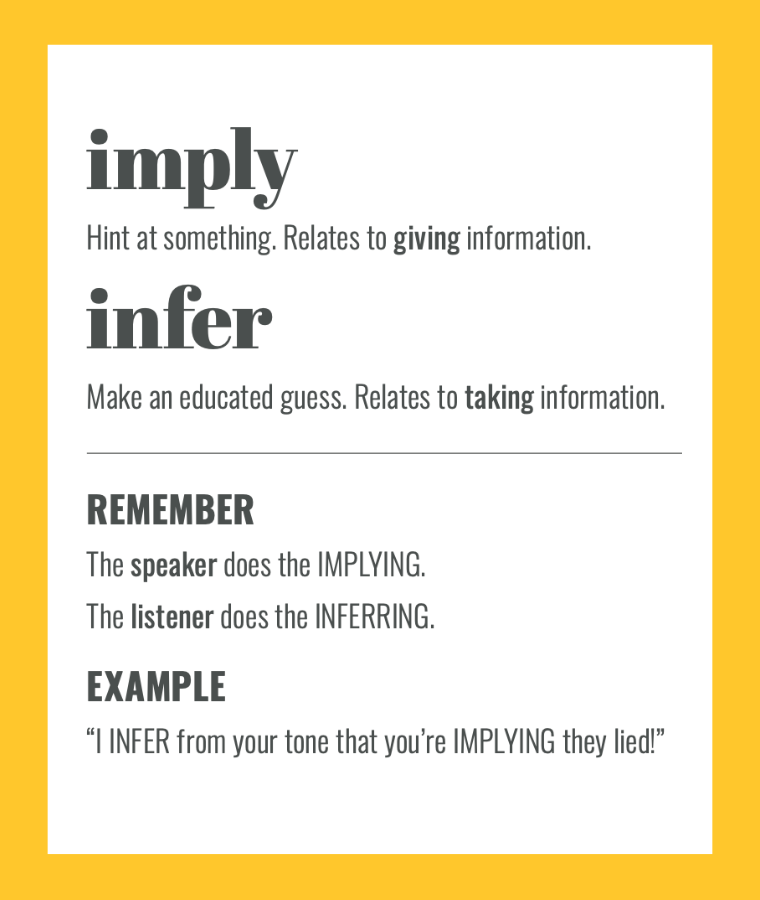
IMPLY or INFER. Excerpt from The Little Book of Confusables by Sarah Townsend.
More than 1,000 misused words demystified
Master 1,000+ confusing words with the multi-award-winning Little Book of Confusables 1 + 2 – jam-packed with memorable, fun spelling and usage tips: from ACCEPT + EXCEPT and OPTIMAL + OPTIMUM, to BARE + BEAR and PURPOSEFULLY + PURPOSELY.
Loved by writers and non-writers alike, these gorgeously accessible books have been described as “An absolute joy”, “The books you never knew you needed” and “Perfect for anyone who ever has to write anything!”.
My four-times award-winning books take the mystery out of misused words for just just £11.95. You’ll wonder how you managed without them!
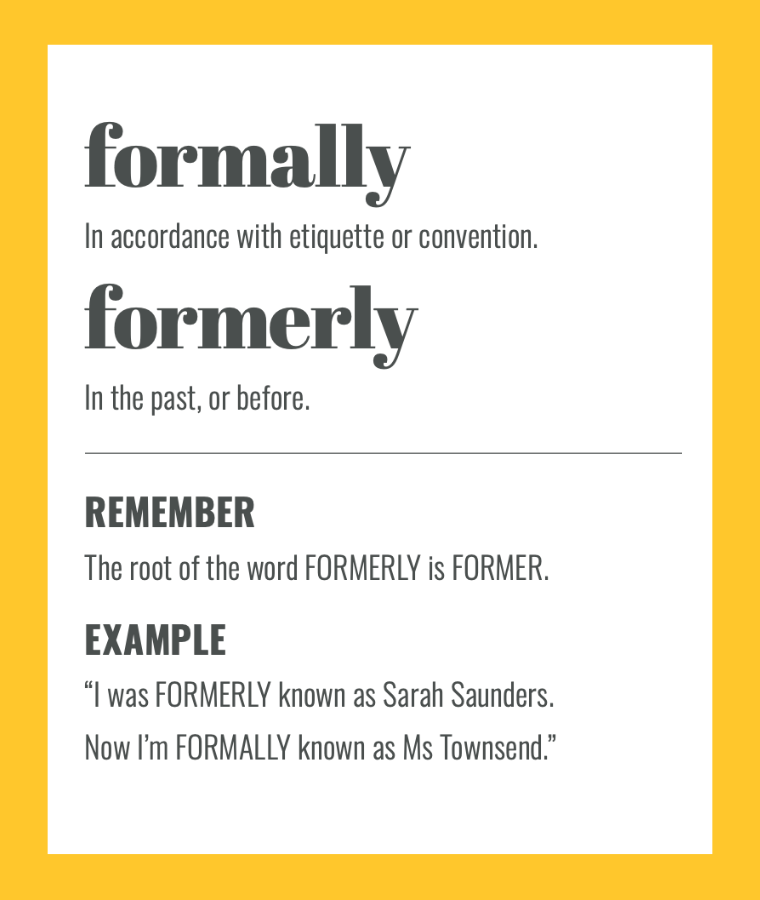
FORMALLY vs FORMERLY. Excerpt from The Little Book of Confusables by Sarah Townsend.
More than 1,000 misused words demystified
Master 1,000+ confusing words with the multi-award-winning Little Book of Confusables 1 + 2 – jam-packed with memorable, fun spelling and usage tips: from ACCEPT + EXCEPT and OPTIMAL + OPTIMUM, to BARE + BEAR and PURPOSEFULLY + PURPOSELY.
Loved by writers and non-writers alike, these gorgeously accessible books have been described as “An absolute joy”, “The books you never knew you needed” and “Perfect for anyone who ever has to write anything!”.
Stationery vs stationary: simple tips to remember the difference
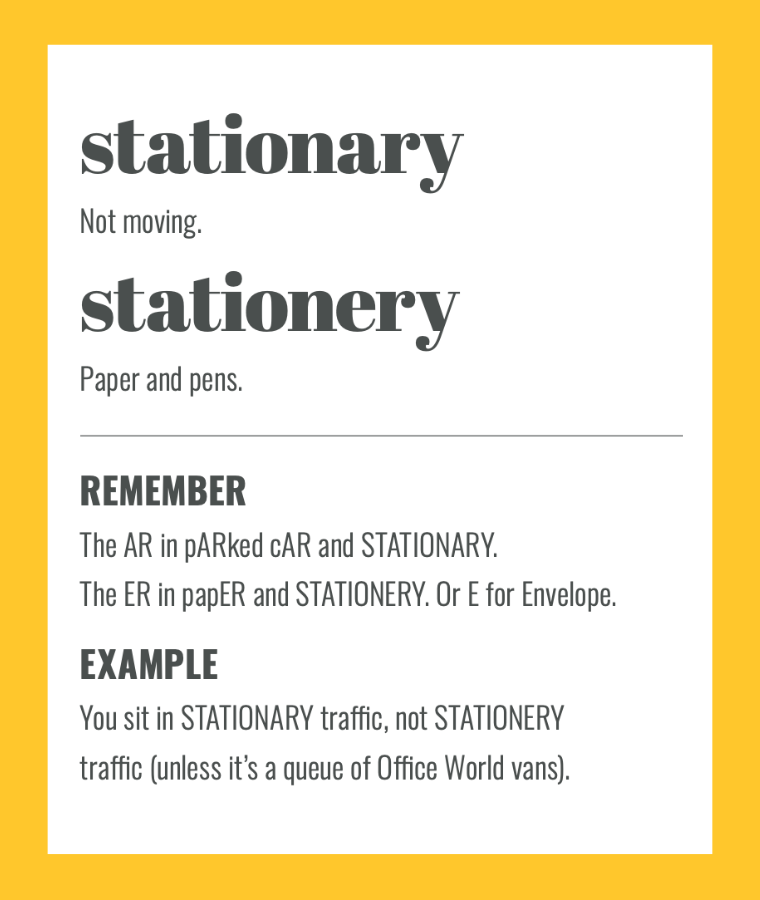
STATIONERY vs STATIONARY: which is which? Tips and tricks to remember the difference
STATIONERY and STATIONARY are commonly confused – and often by people who really should know better. I’ve seen graphic designers and printers offering ‘eye-catching STATIONARY’ more times than I care to remember – most recently in a glossy brochure promoting the services of a Gloucester-based design agency.
It makes me cringe – and I’m not the only one. So, here’s a simple tip to help you remember the correct spelling every time.
STATIONERY is a noun that means the tools used in offices, or for writing – paper and pens, in a nutshell.
You can remember E for Envelopes, or ER in papER.
For example:
“I used to love going back to school after the long summer holidays. It was always a good excuse to buy new STATIONERY.”
STATIONARY is an adjective used to describe something that’s still, or not moving.
Remember the AR in pARked cAR.
For example:
“Sorry I’m late – I was stuck in STATIONARY traffic.”
“Sorry I’m late – I was stuck in STATIONERY traffic” makes no sense. Unless it was a queue of Office World vans.
I hope this simple tip helps you remember the difference between STATIONERY and STATIONARY.
My four-times award-winning books take the mystery out of misused words for just just £11.95. You’ll wonder how you managed without them!
STATIONARY vs STATIONERY. Excerpt from The Little Book of Confusables by Sarah Townsend.
More than 1,000 misused words demystified
Master 1,000+ confusing words with the multi-award-winning Little Book of Confusables 1 + 2 – jam-packed with memorable, fun spelling and usage tips: from ACCEPT + EXCEPT and OPTIMAL + OPTIMUM, to BARE + BEAR and PURPOSEFULLY + PURPOSELY.
Loved by writers and non-writers alike, these gorgeously accessible books have been described as “An absolute joy”, “The books you never knew you needed” and “Perfect for anyone who ever has to write anything!”.
My four-times award-winning books take the mystery out of misused words for just just £11.95. You’ll wonder how you managed without them!
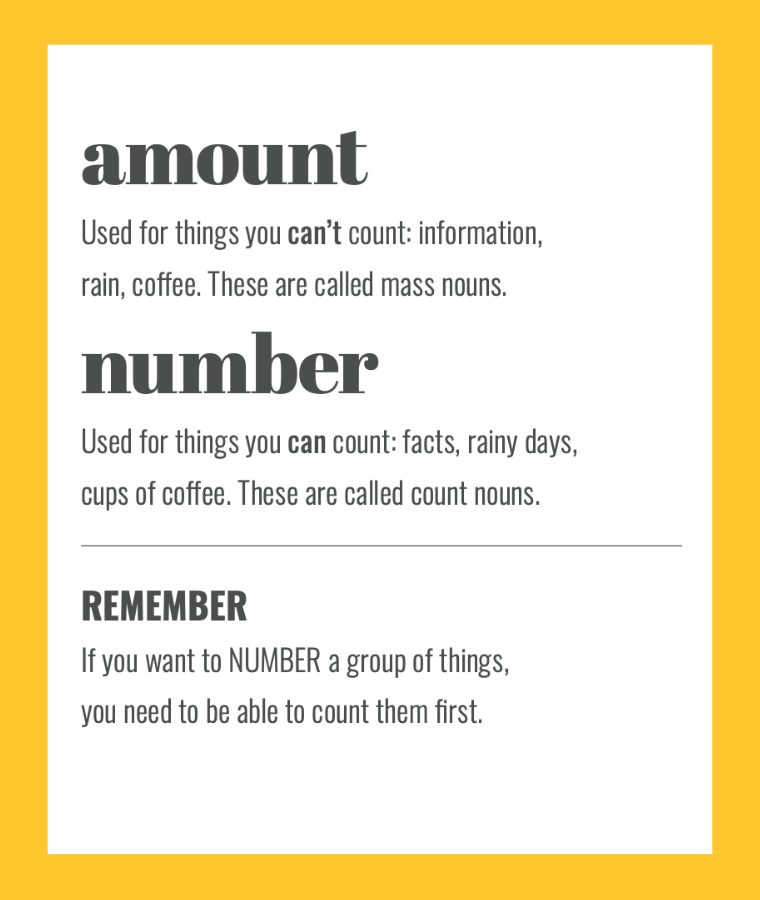
NUMBER vs AMOUNT. Excerpt from The Little Book of Confusables by Sarah Townsend.
More than 1,000 misused words demystified
Master 1,000+ confusing words with the multi-award-winning Little Book of Confusables 1 + 2 – jam-packed with memorable, fun spelling and usage tips: from ACCEPT + EXCEPT and OPTIMAL + OPTIMUM, to BARE + BEAR and PURPOSEFULLY + PURPOSELY.
Loved by writers and non-writers alike, these gorgeously accessible books have been described as “An absolute joy”, “The books you never knew you needed” and “Perfect for anyone who ever has to write anything!”.
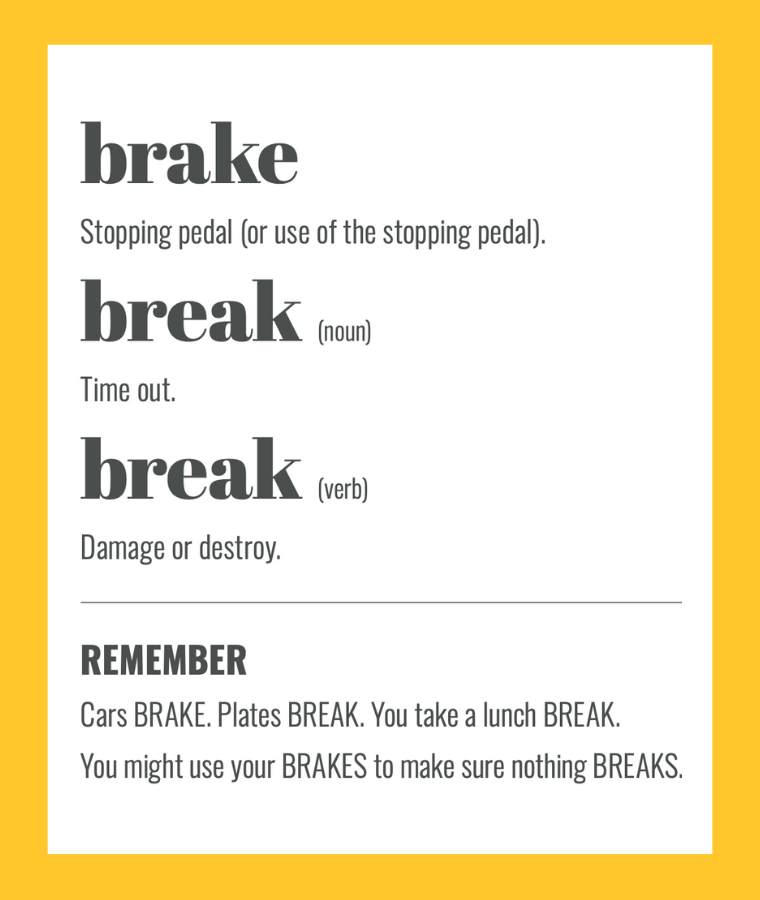
BRAKE vs BREAK: which is which? Tips and tricks to remember the difference
BRAKE and BREAK are easy to confuse – especially if you’re new to the English language. The fact that the two words sound the same – they’re homophones – means people commonly mix them up.
Here are my simple spelling tips to remember the difference between BRAKE and BREAK.
When to use BREAK
BREAK can be both a noun and a verb.
As a noun, BREAK means time out.
“It’s time for your lunch BREAK”
“Let’s take a BREAK”
As a verb, BREAK means damage or destroy.
“I dropped my phone but luckily it didn’t BREAK.”
When to use BRAKE
BRAKE can be both a noun and a verb.
As a noun, a BRAKE is the stopping pedal in a car or other vehicle.
As a verb, BRAKE means to slow down or stop – for example, a car.
Noun: “Remember to use the BRAKE to stop the car in good time.”
Verb: “I had to BRAKE hard to avoid the oncoming cyclist.”
My four-times award-winning books take the mystery out of misused words for just just £11.95. You’ll wonder how you managed without them!
BREAK vs BRAKE. Excerpt from The Little Book of Confusables by Sarah Townsend.
More than 1,000 misused words demystified
Master 1,000+ confusing words with the multi-award-winning Little Book of Confusables 1 + 2 – jam-packed with memorable, fun spelling and usage tips: from ACCEPT + EXCEPT and OPTIMAL + OPTIMUM, to BARE + BEAR and PURPOSEFULLY + PURPOSELY.
Loved by writers and non-writers alike, these gorgeously accessible books have been described as “An absolute joy”, “The books you never knew you needed” and “Perfect for anyone who ever has to write anything!”.