

ADVERSE vs AVERSE: simple spelling tips to remember the difference
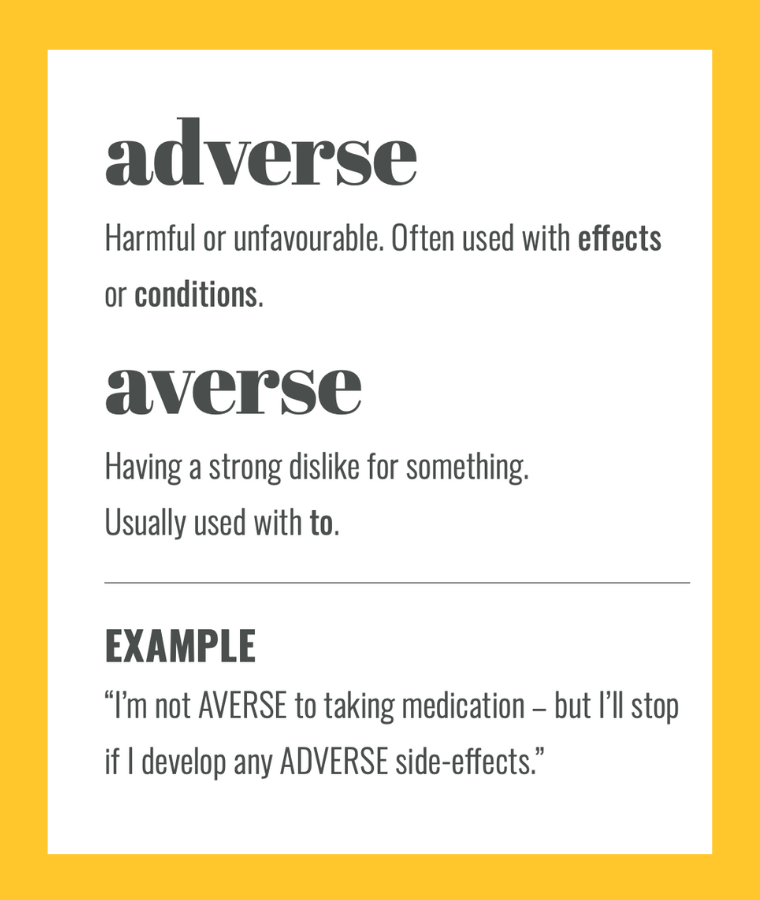
The words ADVERSE and AVERSE are easy to confuse because they look alike – but that doesn’t mean they can be used interchangeably! Read on to remember the difference between these two commonly confused words.
Here are my simple tips to remember the difference between ADVERSE and AVERSE.
When to use ADVERSE
ADVERSE is an adjective that means harmful or unfavourable. It’s often used with the word ‘effects’ or ‘conditions’.
You can use ADVERSE in a sentence like this:
“The prescribed medicine had an ADVERSE effect on the patient.”
OR
“The strike had an ADVERSE effect on production.”
When to use AVERSE
AVERSE is an adjective that describes the feeling of having a strong dislike for something.
It’s often used with the preposition ‘to’, like this:
“I became vegan because I’m AVERSE to eating meat.”
But it can also be used in a compound adjective, like this:“When it comes to investing my money, I’m fairly risk-AVERSE.”
This sentence shows the difference between ADVERSE and AVERSE in use:
“I’m not AVERSE to taking medication – but I’ll stop if I develop any ADVERSE side-effects.”
Get more simple, memorable spelling tips in The Little Book of Confusables 1 + The Little Book of Confusables 2
My four-times award-winning books take the mystery out of misused words for just just £11.95. You’ll wonder how you managed without them!
GOLD award winner: 2023 eLit book awards/Distinguished Favorite: 2023 NYC Big Book Awards.

More than 1,000 misused words demystified
Master 1,000+ confusing words with the multi-award-winning Little Book of Confusables 1 + 2 – jam-packed with memorable, fun spelling and usage tips: from ACCEPT + EXCEPT and OPTIMAL + OPTIMUM, to BARE + BEAR and PURPOSEFULLY + PURPOSELY.