As a freelance copywriter, I’ve worked from home for 25 years.
I’ve been there, done that, and got the scars to prove it. And, as a single parent for 15 of those years, I’ve learned to juggle kids, home and work without totally losing control.
(Most of the time, at least!)
A whole new world…
The world changed in 2020 when tens of thousands of employees who were used to the accountability, buzz and connection of office life found themselves working from home for the first time.
Today, more jobs than ever are either permanently home-based or hybrid – featuring a blend of home and office-based working.
If you’ve never worked from home before, you may feel out of your depth.
- How do you juggle work and home life?
- What about boundaries?
- How do you focus?
- What about dealing with isolation?
The following work from home tips for newbie homeworkers are adapted from my much-loved guide to self-employment – Survival Skills for Freelancers. I hope you find them helpful.
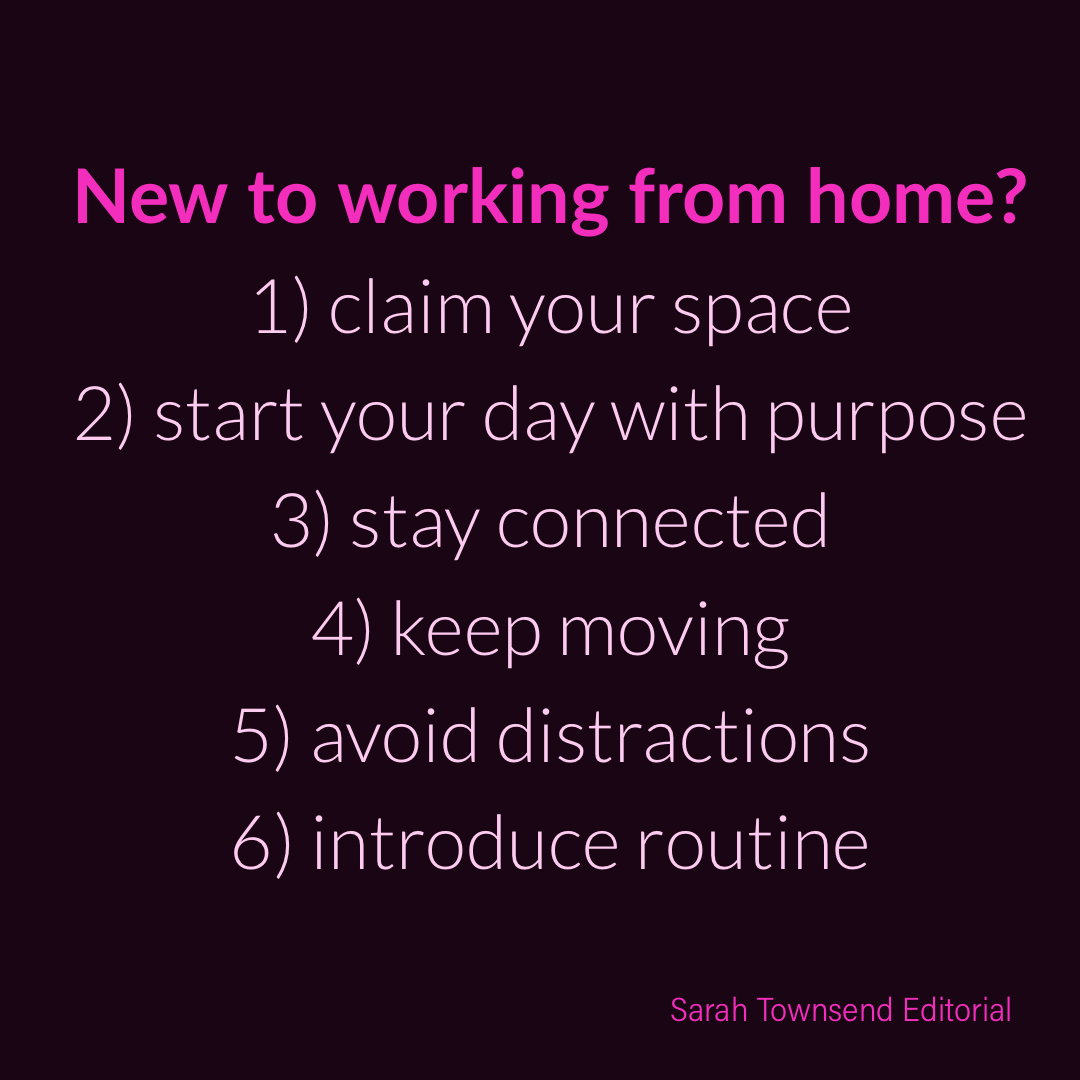
6 simple work from home tips
1. Claim your space
Not everyone is lucky enough to have a spare room they can use as a home office.
Wherever you decide to work from, set some rules around work-free zones for the sake of your family and relationships.
A supportive, adjustable chair, good natural light, a clutter-free table or desk and a door you can close at the end of the day are a bonus.
2. Start your day with purpose
Get up at your usual time. Shower and get dressed, even if you don’t feel like it. (Ban the thought of working in your pyjamas.)
Eat a decent breakfast away from your laptop.
Spend the equivalent of your commuting time reading, exercising, catching an inspiring podcast or listening to music that lifts your mood.
3. Stay connected
Working alone can be isolating – however independent or introverted you are.
Think about joining a Facebook group of likeminded people for support and advice.
There are hundreds of groups out there, based on geographical location, job type or interest.
Experiment to find a group that feels right. Choose one that focuses on the positive, rather than the negative and cynical, which can drag you down.
Or set up an accountability group of colleagues or peers for support, accountability and to help you stay on track.
Use the group chat facility on WhatsApp or Messenger for daily updates and organise a weekly (monthly or fortnightly if you prefer) video call to stay in touch.
4. Keep on moving
Too much sitting is bad for us – particularly if you’re hunched over a laptop, so build regular stretching, standing and movement into your day.
If you have an activity tracker or smartwatch, set it to give you regular reminders to move.
(My Apple Watch is great for this. It even gives me regular reminders to breathe deeply. Sounds obvious but it really does help me calm down on a stressful day.)
Take your phone calls standing up. Pace circuits of your home if you can.
If you’re lucky enough to have a sit–stand desk, try standing up for video calls. It’s energising and good for your physical health. I love it!
Build time into your day for a walk around the block.
Fresh air and exercise are good for focus, productivity and wellbeing – and the thinking time away from your desk (or kitchen table) helps with problem solving and clearing mental blocks.
5. Avoid distractions
Turn off the TV, switch off pop-up notifications and use an app blocker (I use Opal) to stop you checking social media and email every five minutes.
(You know you do it.)
Set an email auto response saying you check your messages just a couple of times a day. The world won’t end while you’re focusing on the task in hand – whatever that may be.
Do household chores in short bursts, if at all.
Unloading the dishwasher or sticking on a wash while you wait for the kettle to boil is a good use of time, and stops you ending the working day to find a pile of chores waiting for you.
6. Introduce routine
It’s easy for work and home life to blur if you don’t have clear boundaries.
Start and end your day at a set time – just as you would if you were going into the office.
Schedule time for lunch, and an outdoor break for fresh air and exercise.
Consider using the Pomodoro time management technique, which splits your day into 25-minute blocks of focused activity with five-minute breaks after each burst.