

Everyday vs every day: tips to remember the difference
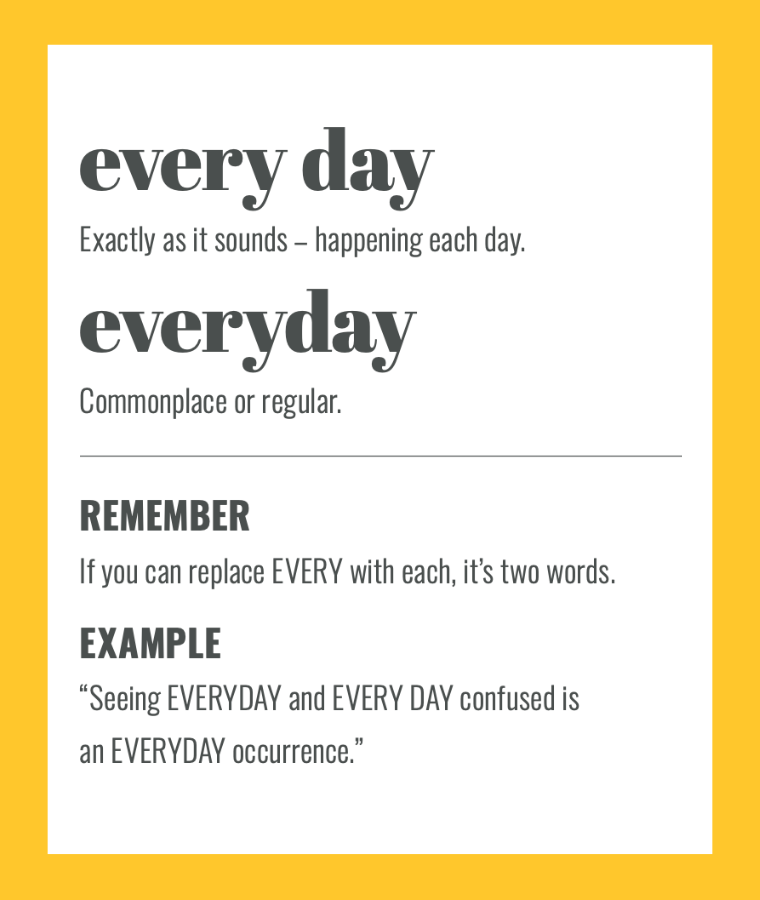
Do you know when to write EVERYDAY and when it should be EVERY DAY? These simple tips will help you get it right.
Driving up the M5 recently I overtook a Poundland lorry emblazoned with the company’s slogan: Amazing value everyday!
If I hadn’t been driving, I’d have thrown large objects in protest. Because what it should say, of course, is Amazing value every day!
Confusing everyday with every day is a common mistake, but there’s a simple tip to make sure you get it right.
If you can replace every day with each day, use every day. For example, ‘I watch TV every day’.
Everyday is an adjective meaning ‘commonplace’, and is used to describe a noun. For example, ‘an everyday occurrence’ means something that happens every day.
Remember, Poundland: your stock may be cheap, but good grammar costs nothing. Unless you paid an expensive ad agency to come up with a bum tagline, of course.
Get more simple, memorable spelling tips in The Little Book of Confusables 1 + The Little Book of Confusables 2
My four-times award-winning books take the mystery out of misused words for just just £11.95. You’ll wonder how you managed without them!
EVERY DAY vs EVERYDAY. Excerpt from The Little Book of Confusables by Sarah Townsend.

More than 1,000 misused words demystified
Master 1,000+ confusing words with the multi-award-winning Little Book of Confusables 1 + 2 – jam-packed with memorable, fun spelling and usage tips: from ACCEPT + EXCEPT and OPTIMAL + OPTIMUM, to BARE + BEAR and PURPOSEFULLY + PURPOSELY.