

IMPLY and INFER are easy to confuse – especially if you’re new to the English language. But these two words are actually opposites.
Here’s a simple tip to remember the difference between IMPLY and INFER.
When to use IMPLY
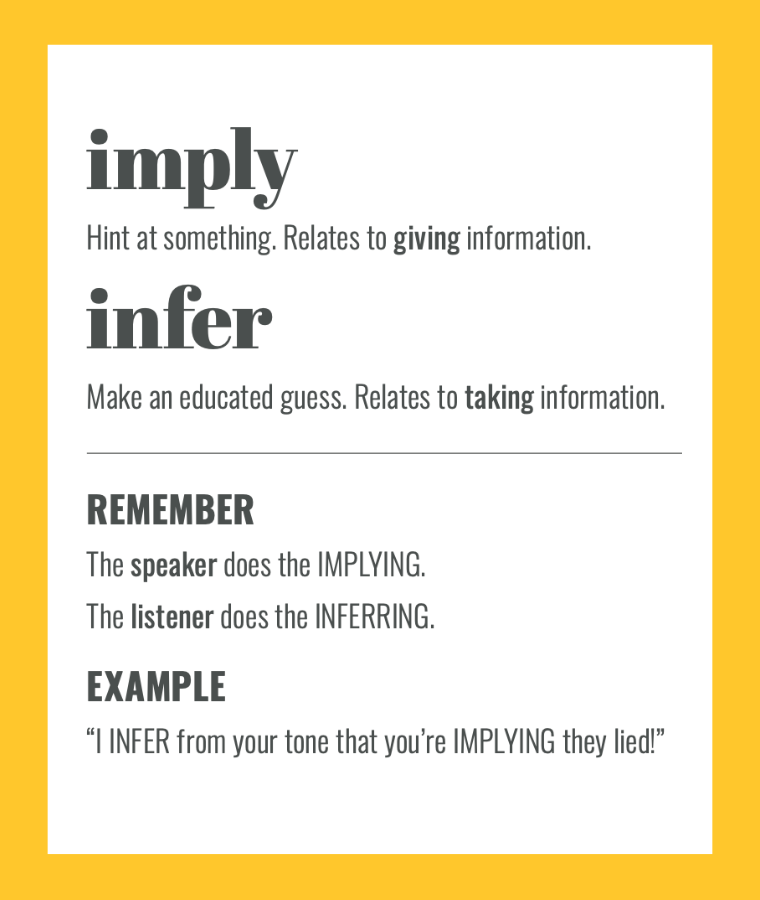
IMPLY is a verb that means to hint at something.
IMPLYING is done by the speaker. It relates to giving information.
“Are you IMPLYING that I lied?”
When to use INFER
INFER is a verb that means to make an educated guess from the information presented to you.
INFERRING is done by the listener. It relates to taking information.
“From what you’ve said, I INFER that it wasn’t the first time this had happened?”
Get more simple, memorable spelling tips in The Little Book of Confusables 1 + The Little Book of Confusables 2
My four-times award-winning books take the mystery out of misused words for just just £11.95. You’ll wonder how you managed without them!
2023 GOLD award winner at the eLit book awards!
IMPLY or INFER. Excerpt from The Little Book of Confusables by Sarah Townsend.
